
Proving the ROI of Sustainability to Executives

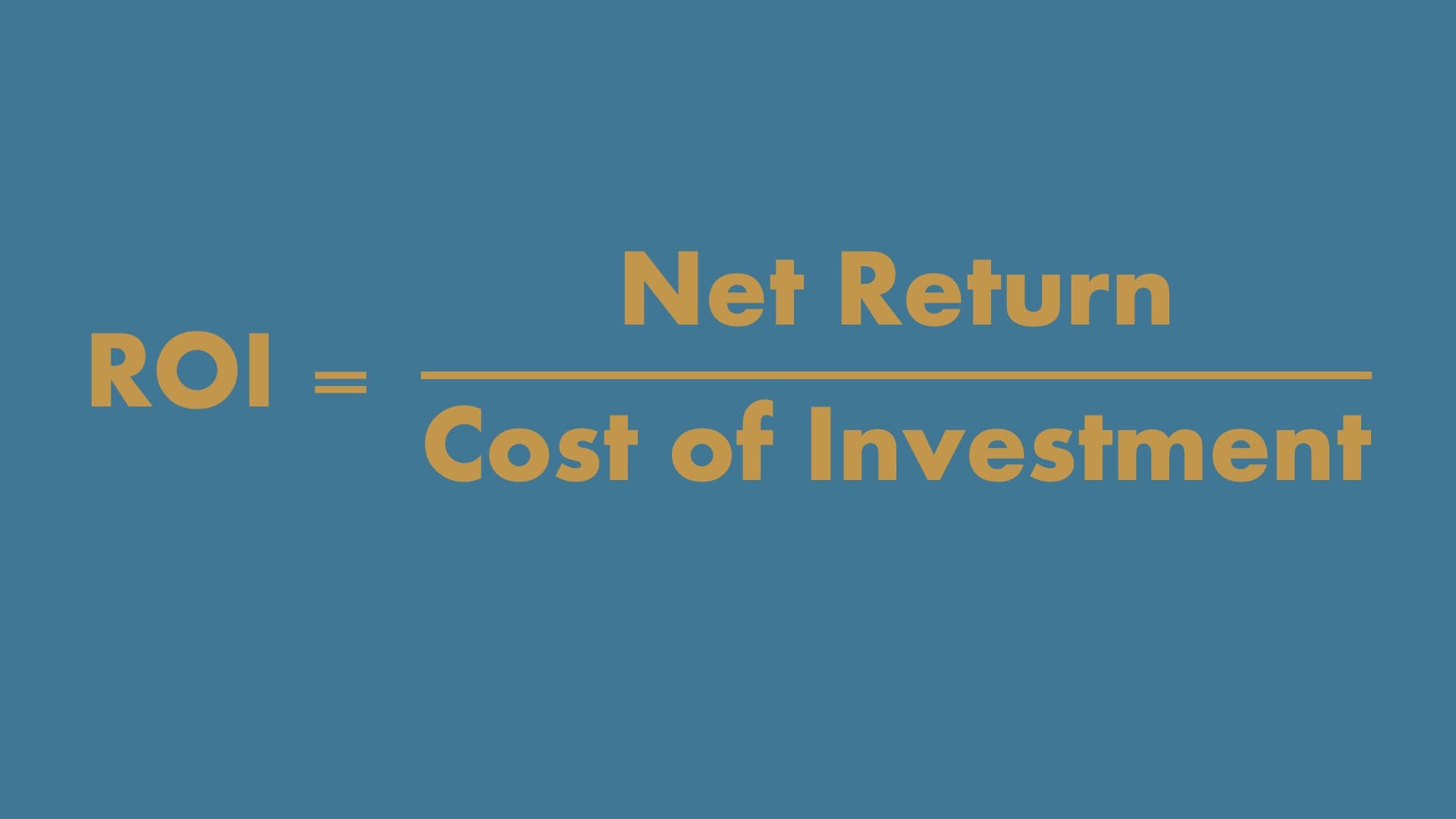
For most executives, sustainability becomes real when it shows up in the same places as every other strategic priority: margin, growth, risk, capital access, and license to operate. As a Director of Sustainability or Chief Sustainability Officer (CSO), your job is to translate sustainability outcomes into decision-ready business value, and then embed that logic into planning, budgeting, and performance management.
There are practical ways to prove return on investment (ROI) that work in executive settings, especially when benefits are distributed across functions or realized over multiple years. The following outline shows how it can be done.
1) Start with how executives define “return”
Executives rarely rely on one discrete ROI number. They need perspectives that connect sustainability to the financial and strategic levers they already manage. A useful approach is to map every initiative to one or more of these return buckets:
- Cost and productivity: energy, materials, waste, water, logistics, maintenance, yield.
- Risk reduction: supply continuity, regulatory exposure, physical climate impacts, litigation, safety, reputation.
- Revenue and growth: preferred supplier status, product differentiation, customer retention, new segments.
- Capital access and cost of capital: insurer terms, lender requirements, investor expectations, credit ratings.
- Talent and culture: attraction, retention, engagement, absenteeism, productivity.
- License to operate: community acceptance, permitting timelines, operational disruption avoidance.
Use the map you create to inform discussions with internal departments about return on projects and how best to accurately show the value of proposed initiative.
2) Seven ROI methods that hold up in executive rooms
Method 1: Prove hard-dollar savings with disciplined baselines
Efficiency is still the fastest path to show financial returns. For energy, waste, and water projects, executives respond to a clear baseline, a documented intervention, and a tracked improvement. Use simple measurement and verification practices: define the baseline period, normalize for production/throughput, and agree up front on who signs off which often includes operations and finance managers.
- Before/after utility intensity (e.g., kWh per unit produced) plus absolute spend.
- Capex/opex, payback period, and sensitivity to energy price.
- Operational co-benefits (maintenance reduction, uptime, quality yield).
Where a consultant helps: building the baseline model, establishing a repeatable M&V template across sites, and facilitating finance department sign-off so savings are accepted into budget cycles.
Method 2: Quantify risk in dollars, not heat maps
Risk is often one of sustainability’s biggest sources of value, but it can be hard to quantify. Use scenarios to convert qualitative risk scores into expected value: probability × impact. For example, estimate the revenue at risk from an extreme-weather supplier disruption or the cost of non-compliance as regulations tighten. Even rough estimates can improve decisions when the assumptions are transparent and the team most exposed to the risk is accountable for them. Here is how to start:
- Translate risks into P&L language: lost sales, expedited freight, downtime, recall costs, premiums, deductibles.
- Use 3 to 4 executive-friendly scenarios (base, moderate, severe, stress test).
- Connect mitigation actions to specific risk reductions (e.g., dual-sourcing reduces probability; flood protection reduces impact).
Where a consultant helps: facilitating cross-functional risk workshops, developing defensible assumptions, and aligning Sustainability, Enterprise Risk, and Finance on a common methodology so the story survives scrutiny.
Method 3: Tie sustainability to commercial outcomes and win-rate
Sustainability is increasingly becoming a revenue enabler in business to business (B2B) selling. It shows up in RFP scorecards, supplier codes, and customer emissions targets. Rather than making broad claims about brand value, work with Sales and Customer Success to measure how sustainability helps win, keep, or grow customer business.
- Track RFPs where sustainability criteria were material: win-rate with vs. without a credible sustainability offer.
- Quantify revenue protected by meeting customer supplier requirements (e.g., product footprint data, renewable electricity, responsible sourcing).
- Identify add-on opportunities, such as services, reporting, or lower-carbon products, that help retain customers or increase how much they buy.
Where a consultant helps: translating technical sustainability work into customer-ready claims, building sales enablement assets, and setting up a simple CRM tagging approach so commercial impact can be measured over time.
Method 4: Demonstrate sustainability benefits when capital is deployed
Executives will pay attention when sustainability affects capital decisions, especially when lenders, insurers, or major investors require disclosures and credible transition plans. Sustainability can result in avoided friction, meaning smoother financing, fewer diligence findings, better insurer terms, and reduced stranded-asset risk. Embeding sustainability criteria into capital approval processes allows all projects to compete on comparable terms.
- Show how sustainability data reduces due diligence time and improves lender/investor confidence.
- Quantify insurance impacts where possible (premiums, deductibles, exclusions) tied to resilience improvements.
- For long-lived assets, model future compliance/energy/carbon costs to compare “do nothing” vs. upgrade paths.
Where a consultant helps: building investment-grade transition and resilience analyses, coordinating responses to investor/lender requests, and ensuring assumptions align with Finance and Treasury expectations.
Method 5: Monetize regulatory readiness as avoided cost and operational continuity
Regulation-driven ROI isn’t just about avoiding a fine. It’s about maintaining market access, reducing compliance overhead, and preventing disruption. The best approach is to quantify the incremental cost of non-compliance which includes expedited data collection, consultant-heavy remediation, audit findings, delayed bids, and delayed permits.
- Estimate the cost of non-compliance: temporary labor, system retrofits, restatements, external assurance fixes.
- Track cycle time improvements from standardized data and controls (months to weeks).
Where a consultant helps: interpreting requirements into practical controls, and running readiness assessments so you can prioritize gaps with confidence.
Method 6: Convert “soft” people benefits into measurable workforce value
Executives may dismiss culture benefits until you quantify them. Partner with HR to translate sustainability-driven engagement into turnover, time-to-fill, and safety outcomes. This is especially powerful in tight labor markets, for high-skill roles, or in operations where safety and retention directly affect cost and throughput.
- Estimate turnover cost per role (recruiting + ramp time + productivity loss) and apply to retention changes.
- Link training and safety initiatives to incident rates and workers’ comp costs where applicable.
- Use pulse surveys to identify whether sustainability is a driver of engagement for staff.
Where a consultant helps: designing a measurement approach that HR trusts, benchmarking assumptions, and crafting a realistic executive narrative that doesn’t exaggerate the benefits while still showing material value.
Method 7: Build a sustainability investment portfolio
Individual project ROI can be compelling, but executives allocate capital across portfolios or projects. Create a view that compares initiatives across cost, value, timing, and feasibility. Many teams use a marginal abatement cost curve for emission reduction projects, but you can broaden it into a portfolio dashboard that includes financial return, risk reduction, and strategic alignment. This turns sustainability into an investable plan rather than a set of requests.
- Define decision criteria and weights with your executive sponsors (e.g., NPV/payback, risk reduction, customer impact, feasibility).
- Update quarterly so leaders see momentum and can reallocate resources.
Where a consultant helps: facilitating the prioritization process, building the portfolio model and dashboard, and pressure-testing assumptions to avoid optimism bias.
3) Build an ROI metrics, systems, and controls that executives trust
To embed ROI into your sustainability decision making, invest in the “backbone” that allows Finance and Internal Audit to rely on your numbers. Do this by creating clear definitions, consistent boundaries, documented calculations, and an owners-and-approvers workflow.
- KPI dictionary with definitions, units, boundaries, and calculation steps.
- Single source of truth for core metrics (energy, emissions, waste, water, safety) with version control.
- Controls comparable to financial reporting where stakes are high (approvals, evidence retention, change logs).
- Decision cadence: monthly operating reviews for site metrics; quarterly executive review for portfolio ROI.
Where a consultant helps: selecting and implementing reporting, designing control frameworks (including readiness for external assurance), and training data owners so sustainability reporting is process driven.
4) Package ROI as an executive narrative
Directors of Sustainability often bring too much detail and too little decision context into meetings with executives. Instead, executives want a tight narrative: what changed, why it matters, what you recommend, and what you need from them. Use a consistent structure so your updates become faster to consume, and harder to ignore.
- Value delivered (last quarter/year): 3–5 metrics tied to cost, risk, revenue, or capital.
- Value at risk: top emerging risks and where you need decisions.
- Portfolio outlook: next 2 to 4 quarters, what’s funded, what’s blocked, and expected returns.
- Asks: specific approvals, policy changes, or cross-functional commitments.
Credibility accelerators: co-present with Finance or Operations when possible; document assumptions; and be explicit about confidence levels (high/medium/low) for forward-looking estimates.
Where a consultant helps: turning complex analyses into board-ready storylines, building repeatable templates (dashboards, one-pagers, QBR packs), and providing an external “sanity check” that can make skeptical executives more receptive.
5) Avoid the ROI traps that undermine sustainability leaders
- Overclaiming: If the evidence is weak, treat it as a hypothesis and design a test instead of presenting it as fact.
- Double counting: If two teams claim the same savings, executives will distrust the whole program. Clarify attribution rules.
- One-off wins: A big win without a system rarely repeats. Build processes that survive personnel changes.
- Ignoring trade-offs: Name the costs such as capex, change management, and procurement complexity and show how you mitigate them.
- Talking past the business: “CO2e” alone won’t move every leader. Lead with business value and use sustainability metrics as proof.
Conclusion: Make ROI measurement a capability, not a one-time calculation
Proving the ROI of sustainability is less about finding the perfect metric and more about building a repeatable operating model: clear value pathways, reliable data, cross-functional ownership, and a governance cadence that forces decisions. When you do this well, sustainability becomes a management system for resilience and performance.
90-day action checklist:
- Align with Finance on a shared ROI taxonomy and sign-off process.
- Pick 3–5 priority initiatives and build defensible baselines and owners.
- Build a portfolio dashboard that shows cost, risk, revenue, and timing.
- Create an executive update template that ends with clear “asks.”
- Identify where external support would remove bottlenecks (data, modeling, readiness, facilitation).
Subscribe to the Rising newsletter to get our latest thoughts.
Member discussion